Metal Scrap Shredding Machines: Advanced Recycling and Processing Technology
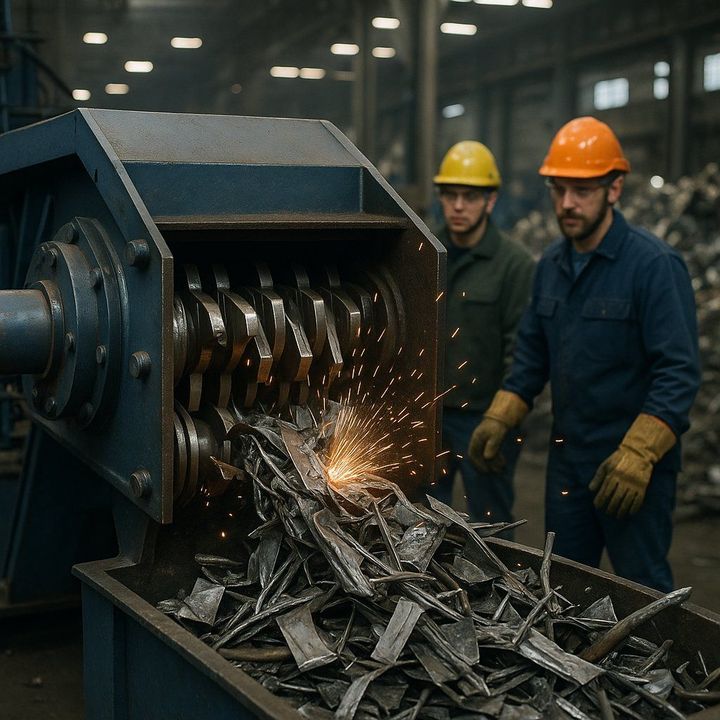
Metal scrap shredding machines are industrial systems designed to break large or bulky metal waste into smaller pieces. These machines play an important role in modern metal recycling by preparing discarded materials for sorting, separation, transport, and further processing.
Metal scrap comes from many sources, including manufacturing plants, construction projects, vehicle dismantling facilities, electrical equipment, and household appliances. Some materials are thin and lightweight, while others are thick, heavy, or mixed with non-metallic components. Shredding equipment helps handle these different material types through controlled mechanical force.
Depending on their design, metal shredders use rotating shafts, cutting tools, hammers, or other mechanisms to reduce scrap size. The processed material can then move through additional stages, such as magnetic separation, screening, and metal recovery.
How Metal Shredding Technology Developed
Earlier scrap-processing operations often depended on manual cutting, basic crushing equipment, and labor-intensive sorting. As industrial production expanded, recycling facilities needed faster and more consistent ways to process larger quantities of metal waste.
Modern industrial shredding systems combine mechanical engineering, automated controls, material-handling equipment, and safety monitoring. Some facilities also use sensors and data analysis to monitor machine performance and identify operating problems.
The main purpose remains straightforward: convert bulky or difficult-to-handle scrap into material that can be processed more efficiently through the recycling chain.
Why Metal Scrap Shredding Machines Matter Today
Supporting the Circular Economy
Metal is valuable as a recyclable material because many metals can be recovered and reused repeatedly when suitable collection and processing systems are available. Recycling helps return recovered materials to manufacturing instead of relying entirely on newly extracted resources.
Metal scrap shredding machines support this process by preparing discarded materials for recovery. They are especially useful when scrap contains mixed shapes, attached components, or irregular pieces that are difficult to handle directly.
Their environmental contribution depends on the complete recycling process, including collection, transportation, energy consumption, separation efficiency, and the quality of the recovered material.
Improving Industrial Material Handling
Large scrap objects can occupy considerable storage space and create challenges during transportation. Shredding can reduce their size, making downstream handling more manageable.
Important operational benefits include:
Size reduction: Bulky scrap becomes smaller and easier to process.
Material separation: Shredded pieces can be directed through magnetic or other separation systems.
Process consistency: Controlled shredding produces material better suited to subsequent processing.
Storage management: Smaller pieces may be easier to arrange in designated storage areas.
Resource recovery: Suitable systems can help recover ferrous and non-ferrous metals from mixed waste.
These outcomes vary according to the material, machine configuration, operating conditions, and separation equipment.
Industries That Use Metal Shredding Equipment
Metal scrap shredding technology is used in several industrial sectors.
Industry | Common materials processed | Main purpose |
|---|---|---|
Automotive recycling | Vehicle bodies and metal components | Prepare scrap for separation |
Manufacturing | Metal offcuts and production rejects | Recover reusable materials |
Construction and demolition | Structural metal and steel pieces | Reduce scrap size |
Electrical equipment recycling | Metal housings and selected components | Separate recoverable materials |
Metal recycling facilities | Mixed ferrous and non-ferrous scrap | Prepare material for further recovery |
Not every shredder is suitable for every material. Equipment selection depends on the scrap's dimensions, thickness, composition, contamination, and required output.
Types of Metal Scrap Shredding Machines
Single-Shaft Shredders
Single-shaft shredders use a rotating shaft fitted with cutting tools to reduce metal or other suitable materials into smaller pieces. Depending on the design, a screen may help control the output size.
These machines are often selected for controlled size reduction, but their suitability depends on the material's hardness, thickness, and shape.
Double-Shaft Shredders
Double-shaft shredders use two rotating shafts to pull, tear, and shear incoming material. They are commonly used for bulky scrap and selected mixed-metal waste streams.
Their slow-speed, high-torque designs can handle certain challenging materials. However, heavy or hardened metal may require a different machine configuration.
Hammer Mills and Hammer Shredders
Hammer shredders use rapidly moving hammers to break suitable materials into smaller fragments. They are used in some large-scale metal recycling operations, including the processing of selected vehicle scrap and mixed metal streams.
The machine must be matched to the material because excessive impact, unsuitable feedstock, or contamination can increase wear and operational risks.
Hydraulic Scrap Shears
Hydraulic shears use powerful cutting force to shorten structural metal, pipes, profiles, and other suitable scrap. Although they are not always shredders in the strict sense, they are often used before shredding or as part of a broader metal-processing line.
The Metal Scrap Shredding Process
A typical metal recycling operation follows several stages. The exact sequence varies according to the facility and the type of scrap being processed.
1. Scrap inspection
Identify metal types, contaminants, hazardous items, and unsuitable materials.
2. Preparation and feeding
Remove prohibited items and prepare suitable scrap for controlled feeding.
3. Mechanical shredding
Reduce the material into smaller fragments using the selected machine.
4. Separation and screening
Separate suitable metal fractions and remove unwanted material where possible.
5. Quality checks and recovery
Inspect recovered materials and direct them to appropriate recycling processes.
Choosing the Right Equipment
Before selecting an industrial metal shredder, operators should assess several practical factors.
Material composition: Steel, aluminium, copper, and mixed scrap behave differently during processing.
Feed size: Large components may require preliminary cutting or shearing.
Required output: Downstream sorting and recycling processes determine the preferred fragment size.
Operating capacity: The system should match the expected material flow and operating schedule.
Energy use: Power requirements should be evaluated alongside throughput and operating conditions.
Maintenance needs: Cutting tools, bearings, drive systems, and wear parts require regular inspection.
Safety features: Emergency stops, interlocks, guarding, and fire detection should be considered.
No single machine type is ideal for every scrap stream. A suitable assessment helps reduce avoidable downtime and improve process consistency.
Recent Developments in Metal Recycling Technology
Artificial Intelligence and Automated Sorting
During 2025 and 2026, greater attention has been given to artificial intelligence, sensor-based sorting, and automated inspection in metal recycling. These technologies can help identify material types, detect unwanted objects, and monitor the quality of incoming and outgoing scrap.
For example, camera-based systems can flag objects that may contain hazardous components before they reach the shredder. Automated detection can support human inspection, although its effectiveness depends on the sensor configuration, material conditions, and system validation.
Digital Monitoring and Predictive Maintenance
Industrial shredders increasingly use connected monitoring systems to track operating conditions. Depending on the equipment, sensors may measure vibration, temperature, motor load, and other performance indicators.
This information can help maintenance teams identify unusual changes before they lead to major interruptions. Digital records also support maintenance planning and analysis of recurring problems. These capabilities do not eliminate the need for physical inspections or qualified operators.
Improved Fire Prevention
Fire prevention remains an important concern in recycling plants, particularly where incoming scrap may contain lithium-ion batteries, pressurized containers, or other hazardous items.
Industry discussions in June 2026 highlighted the potential role of AI-assisted detection and robotics in identifying unsuitable materials and improving operational safety.
Facilities still need suitable inspection procedures, emergency plans, staff training, and fire protection measures. Technology should complement these controls rather than replace them.
Laws, Policies, and Safety Requirements
Metal Recycling Regulations in India
In India, metal scrap processing may be affected by environmental regulations, factory safety requirements, waste-specific rules, and vehicle recycling legislation. The exact obligations depend on the facility, the material being handled, and the applicable state and national requirements.
The Environment (Protection) Act, 1986, and relevant rules made under it provide a framework for environmental protection and pollution control. Facilities may need applicable approvals and must manage emissions, waste, and other environmental impacts in accordance with the rules that apply to their operations.
End-of-Life Vehicle Rules
India notified the Environment Protection (End-of-Life Vehicles) Rules, 2025, on 6 January 2025. The framework includes extended producer responsibility requirements and annual scrapping targets for covered vehicles, beginning in financial year 2025–26.
These rules are relevant to the vehicle recycling chain, where depollution, dismantling, material segregation, and appropriate handling of hazardous components are important steps before metal recovery.
Workplace and Environmental Safety
Operators should evaluate applicable requirements for machinery guarding, electrical safety, worker training, noise, dust, fire protection, and emergency response.
Useful precautions include:
Keep workers away from moving shafts and cutting mechanisms.
Use lockout and isolation procedures before maintenance.
Inspect incoming scrap for batteries, sealed containers, and hazardous substances.
Maintain suitable dust extraction and fire detection systems.
Store processed scrap in designated areas.
Keep records of inspections, incidents, and required environmental monitoring.
Regulatory requirements can change, so facilities should confirm current obligations with the relevant authorities and qualified compliance professionals.
Tools and Resources for Better Shredding Operations
Metal recycling facilities can use several types of tools to improve planning and operational control.
Tool or resource | Main purpose |
|---|---|
Material assessment checklist | Record scrap composition and contamination risks |
Throughput calculator | Estimate processing capacity from operating data |
Energy monitoring system | Track electricity consumption and machine load |
Maintenance log template | Record inspections, repairs, and component replacement |
Safety inspection checklist | Verify guarding, emergency stops, and workplace controls |
Material tracking software | Record incoming loads and recovered material quantities |
Environmental monitoring equipment | Measure relevant dust, noise, or emission indicators |
A basic throughput calculation is:
Throughput = Processed material ÷ Operating time
For example, processing 12 tonnes over 3 operating hours equals an average throughput of 4 tonnes per hour. This is a simple operational measure, not a guarantee of future performance.
When comparing machine performance, facilities should also record downtime, energy consumption, output quality, maintenance frequency, and the proportion of material successfully recovered.
Frequently Asked Questions
What is a metal scrap shredding machine used for?
It reduces suitable metal scrap into smaller pieces for easier handling, sorting, separation, and further recycling. Its applications include manufacturing waste, vehicle scrap, and selected construction metal.
Which metals can industrial shredders process?
Depending on the machine design, they can process materials such as steel, iron, aluminium, and selected copper-containing scrap. Hardness, thickness, size, and contamination determine whether a particular machine is appropriate.
How does metal shredding support recycling?
Shredding prepares scrap for subsequent separation and recovery. When combined with suitable sorting systems, it helps recycling facilities produce metal fractions that can enter appropriate material recovery processes.
What safety risks are associated with metal shredding?
Common risks include moving machinery, flying fragments, excessive noise, dust, electrical hazards, and fires caused by batteries or other hazardous items. Proper guarding, inspection, training, and emergency procedures are essential.
What factors affect industrial shredder performance?
Material type, feed size, cutting-tool condition, machine design, motor capacity, operating settings, and maintenance practices all influence throughput and output quality. Actual performance should be assessed under representative operating conditions.
Conclusion
Metal scrap shredding machines are an important part of modern recycling and industrial material recovery. By reducing bulky scrap into manageable pieces, they support sorting, transportation, and the recovery of metals for further use.