Advanced Lapping Machines: Automation, Precision & Manufacturing Trends
Advanced lapping machines are precision manufacturing systems designed to produce highly flat surfaces, controlled dimensions, and fine surface finishes. Lapping removes very small amounts of material through controlled contact between a workpiece, an abrasive medium, and a lapping surface.
Unlike conventional machining processes that remove relatively larger amounts of material, lapping is generally used during finishing stages when manufacturers need tighter dimensional control and improved surface quality.
Modern systems can incorporate CNC controls, automated workpiece handling, pressure monitoring, temperature sensors, thickness measurement, and digital process monitoring. These technologies make lapping more repeatable and suitable for demanding applications.
Lapping technology is used across industries such as semiconductor manufacturing, optics, aerospace, automotive components, ceramics, medical devices, precision engineering, and electronics.
The growing use of hard and brittle materials such as silicon carbide, sapphire, ceramics, and advanced composites has also increased interest in highly controlled surface-finishing processes. Precision lapping and polishing equipment is increasingly associated with applications requiring ultra-flat surfaces and low surface roughness.
How the Lapping Process Works
A typical lapping process involves several controlled steps:
- Preparing and positioning the workpiece
- Selecting an appropriate abrasive
- Applying controlled pressure
- Moving the workpiece against the lapping surface
- Monitoring material removal
- Measuring flatness, thickness, and surface condition
- Cleaning and inspecting the finished component
Abrasive selection depends on the material and required finish. Diamond and cubic boron nitride can be used for demanding materials, while other abrasive systems may be appropriate for different applications.
Advanced machines can automate several of these stages, helping maintain consistent processing conditions.
Why Advanced Lapping Machines Matter Today
Supporting High-Precision Manufacturing
Manufacturing industries increasingly require components with tighter dimensional tolerances and more consistent surface characteristics. Semiconductor wafers, optical components, ceramic substrates, precision seals, and aerospace components are examples where surface condition can directly influence subsequent manufacturing or component performance.
Advanced lapping machines can help manufacturers maintain controlled processing parameters over repeated production cycles.
Improving Process Repeatability
Manual lapping can depend heavily on operator technique. Machine-controlled systems can standardize parameters such as pressure, rotation, speed, time, and abrasive delivery.
Automation does not remove the need for technical knowledge. Instead, it can allow operators and engineers to focus more closely on process setup, inspection, data analysis, and quality control.
Supporting Difficult Materials
Modern manufacturing increasingly uses materials that are hard, brittle, or difficult to finish through conventional methods.
Examples include:
- Silicon carbide
- Sapphire
- Technical ceramics
- Optical glass
- Quartz
- Hardened metals
- Advanced composite materials
These materials require careful control because excessive pressure, heat, or uneven material removal can affect the final component.
Reducing Process Variation
One important objective of precision manufacturing is reducing variation between components. Sensors, automated controls, and inspection systems can help identify changes during production.
For example, a thickness sensor can provide information about material removal, while temperature monitoring can identify conditions that may influence dimensional stability.
The wider manufacturing industry is also moving toward connected equipment, AI-assisted analytics, digital twins, and integrated automation. A 2026 industrial manufacturing report found that AI adoption is moving from isolated experiments toward broader production use, although data quality remains a significant challenge.
Recent Developments and 2025–2026 Trends
Automation and Robotic Handling
One of the major developments in precision finishing is greater automation.
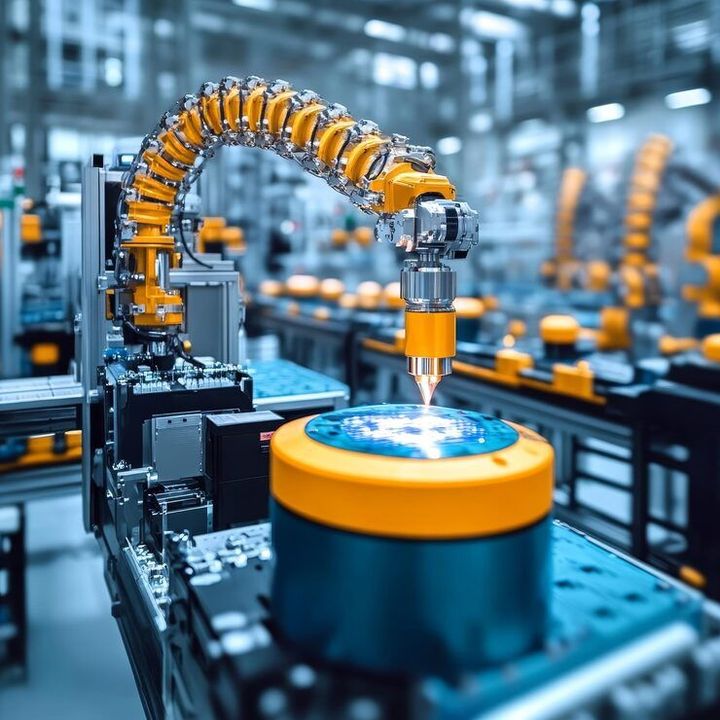
Automated loading and unloading can reduce repetitive handling and improve consistency. Robotic systems may also connect lapping machines with cleaning, inspection, measurement, and material-handling stages.
This supports the development of automated production cells rather than isolated machines.
Real-Time Measurement
Real-time measurement is becoming increasingly important for precision lapping.
Modern systems can integrate sensors for monitoring:
- Thickness
- Flatness
- Pressure
- Temperature
- Machine vibration
- Spindle or plate conditions
- Process duration
Real-time information can help identify deviations earlier in the manufacturing cycle.
AI and Data-Driven Manufacturing
AI is becoming more visible across precision manufacturing. In 2026, manufacturing technology discussions increasingly focus on combining machine data, sensors, analytics, and automation.
Broader CNC manufacturing trends include AI-supported process adjustment, digital twins, connected machines, and automated production cells.
For lapping, similar technologies can potentially support condition monitoring, anomaly detection, process optimization, and predictive maintenance. However, AI-based recommendations still require appropriate data, validation, and human oversight.
Digital Twins
Digital twins create a digital representation of a machine, process, or production environment.
In precision manufacturing, a digital twin can help engineers study machine behavior, simulate process changes, monitor equipment data, and identify potential issues before physical production changes are introduced.
The use of digital twins is also expanding across industrial automation as manufacturers seek more connected and measurable production workflows.
Advanced Abrasives and Sustainable Processing
Another development is the use of advanced abrasive materials and more efficient process designs.
Research into ultra-precision manufacturing is also examining lower-waste processes, recyclable materials, reduced-fluid approaches, and energy-efficient technologies.
The environmental impact of abrasive slurry, process fluids, consumables, and waste is therefore becoming an important engineering consideration.
2025–2026 Technology Snapshot
| Technology | Manufacturing Role | Main Objective |
|---|---|---|
| CNC control | Automated process control | Repeatability |
| Robotic handling | Loading and unloading | Consistent handling |
| Thickness sensors | In-process measurement | Dimensional control |
| AI analytics | Data analysis | Process monitoring |
| Digital twins | Virtual process modeling | Process optimization |
| Advanced abrasives | Precision material removal | Surface quality |
| Automated inspection | Quality measurement | Defect detection |
Recent industry research indicates that automation, real-time measurement, and connected production systems are becoming important parts of the development of modern lapping equipment.
Laws, Standards, and Manufacturing Policies
Workplace Safety Requirements
Lapping machines contain moving components, rotating surfaces, abrasive materials, electrical systems, and sometimes process fluids. Appropriate machine guarding, emergency controls, electrical protection, operator training, and maintenance procedures are therefore important.
The exact requirements depend on the country where equipment is installed and operated.
Manufacturers should consult applicable national occupational safety rules and machinery requirements before commissioning equipment.
Machinery and Electrical Compliance
Industrial machinery can be affected by requirements covering mechanical safety, electrical systems, electromagnetic compatibility, guarding, documentation, and risk assessment.
For international manufacturing environments, commonly recognized technical standards can help organizations establish consistent approaches to machine safety and industrial automation.
Automation and Cybersecurity
Connected manufacturing equipment creates another policy consideration: cybersecurity.
Modern machines may communicate with production networks, monitoring platforms, databases, or industrial control systems. Industrial cybersecurity frameworks such as ISA/IEC 62443 are increasingly relevant to connected automation environments.
Organizations should evaluate network access, authentication, software updates, segmentation, data protection, and remote connectivity as part of their manufacturing risk-management approach.
Tools and Resources for Lapping Machine Planning
Process Measurement Tools
Useful measurement categories include:
- Surface roughness instruments
- Flatness measurement equipment
- Thickness gauges
- Optical inspection systems
- Coordinate measurement systems
- Temperature sensors
- Vibration monitoring equipment
The correct measurement method depends on the component material, dimensions, tolerance, and required surface specification.
Process Planning Resources
Manufacturing teams can also use:
- Abrasive selection charts
- Process parameter worksheets
- Preventive maintenance templates
- Machine inspection checklists
- Quality-control forms
- Production data dashboards
- Dimensional tolerance calculators
- Surface-finish reference charts
These resources can help standardize manufacturing procedures and make process documentation easier to maintain.
Digital Manufacturing Resources
Digital tools can include machine monitoring platforms, production dashboards, statistical process-control software, digital twin environments, CAD/CAM systems, and industrial data-analysis tools.
The most useful approach is generally to connect measurement data with actual manufacturing requirements rather than collecting data without a defined purpose.
Frequently Asked Questions
What are advanced lapping machines used for?
Advanced lapping machines are used for precision surface finishing and controlled material removal. Common applications include semiconductor wafers, optical components, ceramics, precision metal parts, and other components requiring high flatness or controlled surface characteristics.
What is the difference between lapping and grinding?
Grinding generally removes material using a rotating abrasive wheel and can remove material relatively quickly. Lapping is typically a finer finishing process designed to achieve controlled flatness, dimensions, and surface characteristics.
The appropriate process depends on the material and required specification.
Can lapping machines be automated?
Yes. Advanced systems can incorporate CNC controls, automated loading, robotic handling, sensors, automatic pressure control, process monitoring, and inspection systems.
The level of automation depends on production requirements and machine configuration.
Which industries use precision lapping?
Precision lapping is used in semiconductor and electronics manufacturing, optics, aerospace, automotive, ceramics, medical-device manufacturing, precision engineering, and other industries where controlled surface finishing is important.
Is AI replacing conventional lapping processes?
AI does not replace the fundamental lapping process. Instead, AI and data analytics can support monitoring, anomaly detection, process analysis, predictive maintenance, and parameter optimization.
Human engineers and operators remain important for process validation, machine setup, quality decisions, and safety.
Conclusion
Advanced lapping machines are becoming an important part of modern precision manufacturing because industries increasingly require controlled dimensions, consistent surface quality, and reliable processing of difficult materials.