Automatic Labeling Equipment: Latest Technology & Industry Overview
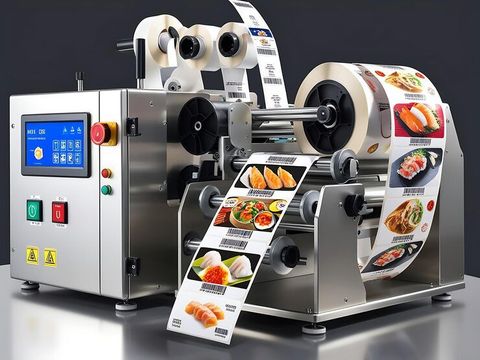
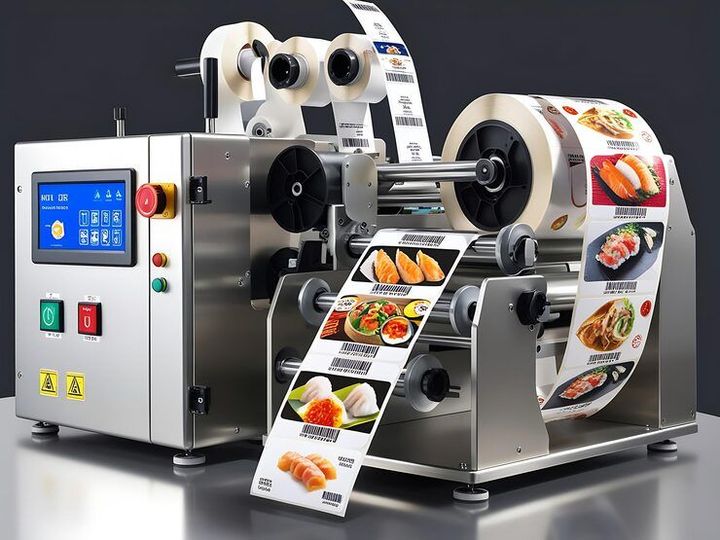
Automatic labeling equipment is a type of industrial packaging machinery designed to apply labels to products, containers, cartons, bottles, boxes, and other packages with limited manual intervention. Depending on the machine configuration, labels may be applied to the front, back, top, bottom, side, or multiple surfaces of a package.
The basic purpose is straightforward: position the correct label in a consistent location at an appropriate production speed. A typical system may combine a conveyor, label dispenser, applicator, sensors, controller, product-positioning mechanism, and inspection camera.
Automatic labeling technology exists because modern manufacturing often handles large numbers of products and packaging formats. Manual labeling can create inconsistent positioning and makes it harder to maintain traceability across fast production lines. Automated equipment helps standardize the process while allowing operators to monitor production and quality.
Common technologies include:
- Pressure-sensitive labeling systems
- Wrap-around labeling machines
- Front-and-back labeling systems
- Top and bottom labelers
- Sleeve labeling equipment
- Print-and-apply systems
- In-line labeling machines
- Rotary labeling systems
- Automatic label applicators
The choice depends on the product shape, container material, label format, production speed, and information that must appear on the package.
Importance
Automatic labeling equipment has become important across food and beverage, pharmaceuticals, cosmetics, chemicals, logistics, household products, and general manufacturing.
Accurate labeling supports product identification and helps manufacturers communicate information such as ingredients, batch information, dates, barcodes, warnings, handling instructions, and traceability data.
For pharmaceutical packaging, labeling can also form part of broader serialization and identification processes. In logistics, machine-readable labels can support tracking through warehouses and distribution networks.
The technology is also becoming more important as manufacturers manage larger numbers of product variations. A flexible labeling system can store different recipes or settings, allowing equipment to handle multiple package sizes and label designs.
Industry data published in 2026 indicates continued expansion of automatic labeling technology, with pressure-sensitive systems remaining a major segment and sleeve labeling attracting increasing attention.
The main operational advantages include:
- Consistent label positioning
- Better production-line integration
- Automated product detection
- Improved batch traceability
- Reduced repetitive manual handling
- Faster format changes
- Compatibility with barcode and code verification
- Integration with packaging inspection systems
Modern equipment can also connect with manufacturing information systems. This allows production data, machine status, recipes, and quality information to become part of a wider digital manufacturing environment.
Key Components and Working Principle
Most automatic labeling machines follow a similar sequence.
First, products enter the machine through a conveyor or feeding mechanism. Sensors identify the approaching product and communicate with the control system.
The labeling unit then releases a label from its backing material. An applicator places the label against the selected surface while maintaining controlled pressure and alignment.
After application, sensors or vision cameras can verify whether the label is present and correctly positioned. Incorrectly labeled products can be separated from the main production flow when an inspection system is integrated.
Important components include:
- Conveyor and product-handling system
- Label roll or label-feeding mechanism
- Drive motor
- Applicator roller or tamping mechanism
- Photoelectric sensors
- Programmable control system
- Human-machine interface
- Barcode or code reader
- Vision inspection camera
- Reject mechanism
The machine's control system coordinates these components so that labeling occurs at the correct position and timing.
Types of Automatic Labeling Equipment
Different industries require different labeling configurations.
Pressure-Sensitive Labeling:
Uses adhesive-backed labels and is widely used for bottles, jars, cartons, and containers.
Wrap-Around Labeling:
Designed for cylindrical products such as bottles, cans, and containers. The label wraps around the product surface.
Front-and-Back Labeling:
Applies separate labels to two sides of a container and is common for bottles and packaged consumer products.
Top-and-Bottom Labeling:
Places labels on the upper and lower surfaces of products such as cartons, trays, and packaged goods.
Sleeve Labeling:
Uses tubular film sleeves that fit around containers. Sleeve technology can provide broad surface coverage and is increasingly associated with flexible packaging designs.
Print-and-Apply Systems:
Print variable information such as barcodes or batch information and immediately apply the label to the product or package.
Recent Technology and Industry Updates
The labeling industry has been moving toward greater automation, digital connectivity, inspection, and sustainability.
In February 2026, industry forecasts highlighted faster changeovers, vision-based quality control, serialization, improved connectivity, remote diagnostics, and better production-data management as important directions for labeling and packaging machinery.
Artificial intelligence and machine vision are also becoming more relevant. Vision systems can inspect label position, barcode readability, printing quality, and other visible characteristics. Connected equipment can collect production information that helps operators understand downtime and quality issues.
Another important trend is the development of smart labels. A 2026 scientific review identified QR codes, RFID, NFC, connected packaging, and digital information systems as technologies that can extend conventional labels with traceability and product information.
Sustainability is another major development. Equipment increasingly needs to accommodate thinner materials, linerless formats, recycled materials, and packaging structures designed around recyclability. Industry forecasts for 2026 identify sustainability and regulatory compliance as central themes in packaging technology.
The wider packaging industry is also moving toward connected and modular production environments. These systems can support changing product specifications without requiring an entirely different production line.
Laws and Policies
Labeling requirements depend heavily on the country and product category. Food, pharmaceutical, chemical, cosmetic, and hazardous products can have different information requirements.
For manufacturers operating internationally, the labeling machine itself is only one part of compliance. The label design, information, language, symbols, traceability data, packaging material, and placement may also need to meet destination-market rules.
A significant recent development is the European Union's Packaging and Packaging Waste Regulation (PPWR). The regulation entered into force in February 2025 and began applying from 12 August 2026. It establishes a harmonized framework covering packaging and packaging waste.
The PPWR also includes future packaging-labeling requirements. Under Article 12, harmonized labeling concerning packaging material composition is scheduled around August 2028, subject to the regulation's implementing-act timing.
These developments matter to automatic labeling equipment because packaging formats and label information can change when regulatory requirements change.
In India, food packaging must also follow applicable national requirements. Industry discussions in July 2026 highlighted the continuing importance of FSSAI labeling compliance and the complexity of preparing packaging information for different export markets.
Manufacturers should therefore verify current requirements with the appropriate national regulator before finalizing a labeling system or packaging format.
Tools and Resources
Several categories of tools can support automatic labeling operations and planning:
- Label dimension and material calculators
- Production-speed and throughput calculators
- Barcode verification tools
- QR-code generation and testing tools
- Machine-vision inspection systems
- Packaging artwork templates
- Digital label-management platforms
- Production monitoring dashboards
- Preventive-maintenance checklists
- Packaging compliance checklists
- OEE calculation tools
- Batch and traceability templates
A useful planning approach is to document the product dimensions, label size, container shape, required labeling position, line speed, label material, code requirements, inspection requirements, and expected product variations before selecting an equipment configuration.
OEE, or Overall Equipment Effectiveness, can help production teams understand how effectively labeling equipment is operating by considering availability, performance, and quality together.
FAQs
What is automatic labeling equipment?
Automatic labeling equipment is industrial machinery that automatically positions and applies labels to products or packages. It commonly uses sensors, conveyors, applicators, controllers, and inspection systems.
Which industries use automatic labeling machines?
They are used across food and beverage, pharmaceuticals, cosmetics, chemicals, logistics, household products, electronics, and general manufacturing.
Can automatic labeling equipment handle different products?
Many modern systems can handle multiple products when they have appropriate adjustment mechanisms, change parts, stored machine recipes, and compatible label formats. The actual flexibility depends on the machine design.
How does machine vision improve labeling?
Machine vision can check label presence, positioning, printed information, and code readability. When connected to a reject mechanism, the system can identify packages that do not meet predefined inspection criteria.
Are labeling requirements the same in every country?
No. Requirements can vary by country, product category, packaging material, language, and intended market. International manufacturers need to verify the rules applicable to each destination.
Conclusion
Automatic labeling equipment has evolved from a simple label-application machine into an increasingly connected part of modern packaging automation. Sensors, programmable controls, machine vision, barcode verification, digital production data, and flexible applicators are changing how labeling lines operate.