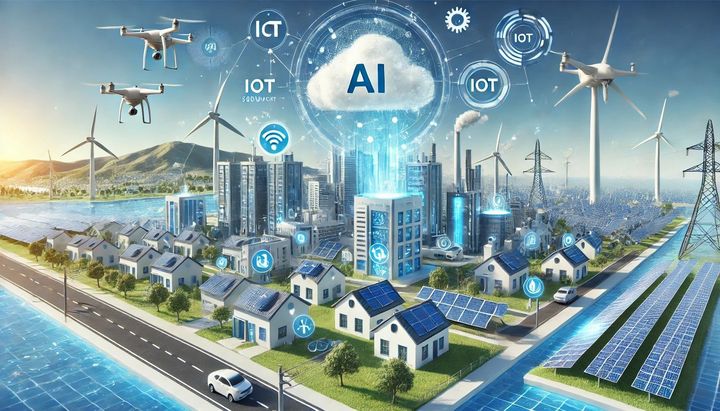
Energy Management System for Industrial Machines: Monitoring, Optimization & Benefits
Industrial machines can consume large amounts of electricity and other forms of energy during production. Motors, compressors, pumps, furnaces, conveyors, machine tools, heating systems, and automated equipment all contribute to overall energy use.
An Energy Management System (EnMS) provides a structured way to monitor, analyze, and improve energy performance. Instead of looking at energy consumption only through monthly utility records, an industrial facility can use an EnMS to understand where, when, and how energy is being used.
An industrial energy management system can combine meters, sensors, machine data, monitoring software, energy performance indicators, and management procedures. The information helps technical teams identify unusual consumption, inefficient operating patterns, and areas where energy performance can be improved.
The international ISO 50001:2018 standard provides a framework for establishing, implementing, maintaining, and continually improving an energy management system. ISO confirmed the standard as current in 2024.
For industrial machines, energy management is closely connected with maintenance, production planning, automation, equipment operation, and environmental performance.
Why Energy Management Matters for Industrial Machines
Energy is an important part of modern manufacturing. Rising attention to energy efficiency, emissions reduction, automation, and data-driven production has made machine-level monitoring increasingly useful.
An energy management system can help organizations understand the relationship between production activity and energy consumption. For example, a facility may discover that a particular machine consumes significant energy while operating below its normal production capacity.
Energy monitoring can also help identify problems such as:
- Motors operating inefficiently
- Compressed-air losses
- Machines running during idle periods
- Unexpected increases in electricity consumption
- Poor equipment scheduling
- Excessive heating or cooling
- Inefficient pumps and fans
- Power-quality issues
- Maintenance conditions affecting energy performance
Energy Performance Indicators, commonly called EnPIs, can be used to compare energy performance over time. Examples include energy used per production batch, electricity per operating hour, or energy consumed per unit of output.
Who Can Benefit From Industrial Energy Monitoring?
Energy management can be relevant to many industrial environments, including:
- Metalworking and fabrication plants
- Food and beverage production
- Chemical processing
- Automotive manufacturing
- Textile production
- Electronics manufacturing
- Plastic processing
- Cement and building-material production
- Warehousing and automated production facilities
- Small and medium-sized manufacturing plants
The exact monitoring approach depends on machine type, production processes, facility size, and energy sources.
How Industrial Machine Energy Optimization Works
A practical energy optimization program generally starts with measurement. Without reliable data, it can be difficult to determine which machines or processes require attention.
A basic system may include electricity meters, current sensors, temperature sensors, pressure sensors, flow meters, machine controllers, and data collection software.
The information can then be organized into dashboards or reports.
| Energy Management Area | Typical Data | Main Purpose |
|---|---|---|
| Machine monitoring | Power, current, voltage | Understand machine consumption |
| Motor monitoring | Load, operating hours | Identify operating patterns |
| Compressed air | Pressure, flow | Detect inefficient usage |
| HVAC and cooling | Temperature, power | Improve thermal management |
| Production | Output, operating time | Compare energy with production |
| Energy analytics | Historical consumption | Identify trends and anomalies |
The next stage is analysis. Energy data can be compared with production levels, operating schedules, environmental conditions, and equipment status.
Optimization may involve adjusting machine schedules, reducing unnecessary idle operation, improving preventive maintenance, correcting compressed-air losses, or reviewing equipment control settings.
The objective is not simply to reduce energy use at any moment. A machine that consumes more energy while producing more output may have better energy performance than a machine using less energy while producing very little.
Recent Developments in Energy Management
Energy management has continued to evolve during 2025 and 2026, particularly through improved energy auditing, digital monitoring, and decarbonization planning.
One notable development is ISO 50002-1:2025, which establishes general requirements and guidance for energy audits. ISO also published related 2025 guidance covering energy audits for buildings and processes.
In March 2026, ISO published ISO 50100:2026, focused on energy management, energy savings, and decarbonization. The document provides requirements and guidance for reducing energy-related greenhouse-gas emissions and connects with the ISO 50001 energy management framework.
Digitalization is another important trend. Industrial facilities increasingly combine machine data with energy information. This can make it easier to observe consumption patterns at shorter intervals instead of relying only on periodic readings.
Another trend is the connection between energy management and automation. Sensors, programmable controllers, industrial communication systems, and analytics platforms can provide more detailed information about machine operation.
These developments show a broader shift from basic energy measurement toward continuous performance management.
Laws, Standards, and Energy Policies
Energy management requirements vary by country and industry. Organizations should check the regulations that apply to their specific facility and production sector.
ISO 50001 is an international management-system standard rather than a universal legal requirement. Certification is not automatically mandatory simply because an organization uses an energy management system.
In India, industrial energy efficiency is supported through programs administered by the Bureau of Energy Efficiency (BEE). One important framework is the Perform, Achieve and Trade (PAT) mechanism for designated energy-intensive industries.
BEE describes PAT as a regulatory instrument aimed at reducing Specific Energy Consumption in energy-intensive industries. Covered designated consumers can have requirements involving energy managers, annual energy-consumption reporting, and periodic energy audits.
BEE information updated in 2026 also shows continuing PAT-related developments, including verification activities for PAT Cycle VIII.
For 2025, BEE reported 1,333 energy-intensive industries covered under the relevant PAT framework, representing approximately 55% of total industrial energy consumption, with reported energy savings of 25.78 million tonnes of oil equivalent.
These figures relate specifically to the Indian PAT framework and should not be interpreted as representing every industrial facility.
Tools and Resources for Energy Management
A practical energy management program can use several categories of tools. The appropriate combination depends on the machines and processes being monitored.
Energy Monitoring Tools
Common tools include:
- Digital electricity meters
- Power-quality meters
- Current and voltage sensors
- Temperature sensors
- Pressure sensors
- Flow meters
- Machine runtime counters
- Data loggers
Energy Analysis Resources
Useful analytical resources include:
- Energy consumption dashboards
- Energy baseline templates
- Energy audit worksheets
- Production-to-energy calculators
- Energy Performance Indicator templates
- Equipment maintenance records
- Load-profile charts
- Monthly energy reports
Industrial Data Systems
Facilities may also connect energy information with:
- Industrial control systems
- Machine monitoring platforms
- Manufacturing data systems
- Building management systems
- Maintenance management platforms
- Production monitoring tools
A useful starting point is to establish a baseline. Historical energy data can then be compared with current performance.
For example:
Energy intensity = Energy consumed ÷ Production output
Tracking this indicator over time can provide more meaningful information than looking only at total electricity consumption.
Frequently Asked Questions
What is an Energy Management System for industrial machines?
An Energy Management System is a structured approach for monitoring, analyzing, controlling, and improving energy performance. It can combine measurement equipment, machine data, procedures, targets, and performance reviews.
What machines can be monitored?
Many types of industrial equipment can be monitored, including motors, pumps, compressors, conveyors, machine tools, furnaces, heating systems, cooling equipment, and automated production machinery.
Does ISO 50001 apply only to large factories?
No. ISO 50001 is designed to apply to organizations of different types and sizes. The monitoring scope and implementation approach can be adapted to the organization and its energy uses.
How does machine-level energy monitoring help?
Machine-level monitoring provides more detailed information than facility-wide consumption data. It can help identify operating patterns, abnormal consumption, idle periods, and areas requiring further investigation.
Is energy management the same as reducing electricity consumption?
Not exactly. Energy management focuses on improving energy performance through measurement, planning, monitoring, analysis, and continual improvement. Lower energy consumption may be one result, but production requirements and energy intensity also need to be considered.
Conclusion
Industrial Energy Management Systems provide a structured way to understand how machines and production processes use energy. By combining measurement, monitoring, analysis, maintenance, and operational planning, organizations can develop a clearer picture of their energy performance.