Modern Spinning Machines: Automation, IoT & Predictive Maintenance Guide
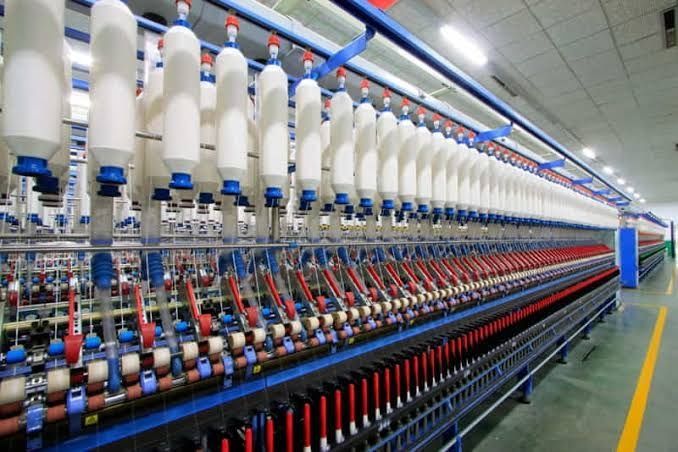
Modern spinning machines are industrial textile machines designed to convert prepared fibers into yarn with controlled thickness, strength, twist, and consistency. They form an important part of textile manufacturing and can include ring-spinning, compact-spinning, rotor-spinning, air-jet spinning, winding, and related automated equipment.
Traditional spinning systems depended heavily on manual observation and scheduled inspections. Modern equipment increasingly uses electronic controls, sensors, automation, and production-monitoring software. These technologies help operators observe machine conditions while production is taking place.
The development of smart spinning equipment is closely connected with Industry 4.0. Instead of treating a machine as an isolated mechanical system, manufacturers can connect equipment to a wider digital production environment.
A modern spinning setup may monitor:
- Spindle speed and operating conditions
- Yarn tension and breakage
- Vibration and temperature
- Humidity and environmental conditions
- Production quantities
- Energy consumption
- Machine alarms and stoppages
- Maintenance indicators
- Yarn quality parameters
This data can help textile plants understand how equipment is performing and identify abnormal operating patterns.
Why Smart Spinning Technology Matters
The textile industry operates at high production speeds, and small variations can affect yarn quality. A problem involving tension, temperature, vibration, drafting, or spindle performance can potentially create repeated defects if it remains unnoticed.
Automation helps reduce the amount of repetitive manual monitoring required. Sensors can continuously collect information, while control systems can display important conditions to operators.
IoT connectivity adds another layer. Industrial Internet of Things systems can connect sensors and machines to monitoring platforms where production data can be analyzed over time.
Predictive maintenance is another important development. Instead of relying only on fixed maintenance schedules or waiting for a component to fail, predictive systems examine machine-condition data to identify patterns associated with possible problems.
Research published in 2026 has examined IoT-based monitoring using vibration, humidity, optical, and other sensors across textile production. One study covering 50 textile manufacturing plants in major Indian textile centers reported improvements in defect detection and production monitoring within its research framework. Such findings are useful indicators of the potential of connected manufacturing, although results can vary considerably between facilities.
Main Technologies Used in Smart Spinning
Modern spinning machines can combine several technologies rather than depending on one system.
| Technology | Main Purpose | Typical Application |
|---|---|---|
| Industrial IoT | Collects machine data | Equipment monitoring |
| Smart Sensors | Measures operating conditions | Vibration, temperature, tension |
| PLC Control | Automates machine functions | Process control |
| Machine Vision | Detects visible abnormalities | Quality inspection |
| Data Analytics | Identifies production patterns | Performance analysis |
| Predictive Maintenance | Detects potential failures | Bearing and motor monitoring |
| Digital Twin | Represents production digitally | Simulation and optimization |
| Edge Computing | Processes data near machines | Fast monitoring and response |
These technologies can work together. For example, sensors may collect vibration information, an edge device may process the data, and an analytics system may identify an unusual pattern.
Automation Across the Spinning Process
Automation is increasingly being applied across several stages of yarn production.
In preparation and blowroom operations, automated controls can help monitor material movement and machine conditions. Carding and drawing equipment can use electronic control systems to maintain process parameters.
In roving and ring spinning, automation can support spindle monitoring, yarn-break detection, drafting control, and machine alarms. Automated winding systems can monitor yarn characteristics and identify certain irregularities during winding.
At the wider mill level, production-monitoring systems can combine information from different machines. This creates a more complete picture of plant performance.
Automation does not eliminate the importance of skilled operators. Human supervision remains important for interpreting information, responding to unusual situations, performing physical inspections, and maintaining safe operating practices.
Predictive Maintenance and Machine Health
Predictive maintenance uses equipment data to estimate when a machine or component may require attention. The objective is to identify developing abnormalities before they become major operational disruptions.
Common indicators include:
- Increasing vibration
- Unusual temperature changes
- Repeated alarms
- Increasing yarn breaks
- Abnormal spindle behavior
- Motor-current variations
- Changes in production quality
- Unusual operating cycles
A predictive maintenance system normally requires historical data. Without reliable data, an algorithm may have difficulty distinguishing normal variation from a genuine machine problem.
A 2026 study focused on intelligent predictive maintenance in the Indian textile industry and examined IIoT sensors and machine-learning techniques for monitoring equipment health. The research reported improvements in selected maintenance-performance measures under its study conditions, while also highlighting the role of digital technologies in identifying abnormalities and supporting planned maintenance.
The practical lesson is that predictive maintenance should complement, rather than replace, routine inspection and preventive maintenance procedures.
Recent Developments in 2026
Several developments during 2026 demonstrate the continuing movement toward smart textile manufacturing.
Research published during 2026 has explored AI-powered anomaly detection, IoT sensor networks, edge computing, cloud analytics, and digital twins for textile manufacturing. These approaches are being studied for real-time quality monitoring and predictive maintenance.
Automation was also a prominent theme at ITM 2026 in Istanbul. Technology demonstrations included autonomous mobile robots for material movement and advanced yarn-quality monitoring, showing how automation is expanding beyond individual machines into broader mill logistics.
In India, the Union Budget 2026–27 placed additional emphasis on textile-sector modernization and sustainability through proposed integrated textile initiatives. The Ministry of Textiles also discussed the Textile Expansion and Employment Scheme and the Tex Eco Initiative during a February 2026 industry consultation.
These developments indicate a broader shift toward connected production, energy awareness, digital monitoring, and data-based decision-making.
Laws, Safety Rules, and Textile Policies in India
Modern spinning machinery operating in India must consider applicable machinery safety, electrical safety, workplace safety, environmental, and energy-efficiency requirements.
An important recent development is India's Machinery and Electrical Equipment Safety (Omnibus Technical Regulation) framework. The 2025 amendment stated that the relevant provisions for machines and electrical equipment listed in the first schedule would apply from 1 September 2026, with applicable Indian Standards and BIS involvement in certification and enforcement.
Energy efficiency is also relevant to large industrial operations. India's Perform, Achieve and Trade framework establishes energy-performance requirements for designated energy-intensive industries, including requirements related to energy management, reporting, and audits for applicable entities.
Textile modernization programs are another policy consideration. In February 2026, the Government of India described initiatives supporting technology modernization in spinning mills, including the Amended Technology Upgradation Fund Scheme and certain state-level modernization measures.
Environmental considerations are becoming increasingly important as well. In March 2026, the Ministry of Textiles reported developments involving greenhouse-gas-emission-intensity targets under India's Carbon Credit Trading Scheme for carbon-intensive sectors, including textiles.
Requirements can differ according to machine type, facility size, state regulations, and applicable industrial classifications. Textile manufacturers should therefore verify the latest requirements applicable to their specific equipment and location.
Tools and Resources for Smart Spinning
Several categories of tools can help organizations understand and manage modern spinning systems.
Machine monitoring dashboards:
These systems display production information, alarms, machine status, and operating parameters in a centralized interface.
Energy monitoring tools:
Energy meters and analytical dashboards can help identify electricity-use patterns across machines and production areas.
Maintenance management software:
Digital maintenance records can track inspections, machine history, recurring faults, component replacement schedules, and maintenance actions.
Sensor systems:
Vibration, temperature, humidity, current, pressure, and other sensors can provide condition-monitoring data.
Production calculators:
Yarn production, spindle utilization, efficiency, twist, and energy-performance calculators can support basic operational analysis.
Data analytics tools:
Statistical analysis and machine-learning tools can identify patterns in machine and production data.
Digital twin platforms:
A digital representation of a production system can be used to examine operating scenarios and understand how process changes may affect production.
Standards and regulatory databases:
Manufacturers and plant managers should consult current national standards, machinery regulations, energy rules, and textile-sector policies relevant to their location.
Frequently Asked Questions
What are modern spinning machines?
Modern spinning machines are textile-production machines that use mechanical systems together with electronic controls, sensors, automation, and monitoring technologies to produce yarn with controlled characteristics.
How does IoT help spinning machines?
IoT technology connects sensors and equipment so operating information can be collected and analyzed. It can help monitor machine health, production conditions, alarms, and selected quality parameters.
What is predictive maintenance in spinning?
Predictive maintenance analyzes machine-condition information to identify unusual patterns that may indicate developing equipment problems. It supports planned inspection and maintenance rather than relying only on fixed schedules or unexpected failures.
Can AI be used in textile spinning?
Yes. AI and machine-learning techniques can analyze production and sensor data for applications such as anomaly detection, quality monitoring, machine-health analysis, and process optimization. The usefulness of these systems depends on data quality and appropriate implementation.
Are modern spinning machines completely automated?
Not necessarily. Automation levels vary by machine and production facility. Modern equipment may automate many repetitive functions while still requiring trained personnel for supervision, maintenance, quality decisions, safety procedures, and process management.
Conclusion
Modern spinning machines are becoming increasingly connected, automated, and data-driven. IoT sensors, industrial automation, predictive maintenance, machine learning, and digital-twin technologies are changing how textile manufacturers monitor equipment and production conditions.