Industrial Carbon Capture Systems Explained: Processes and Technologies
Industrial carbon capture systems are designed to separate carbon dioxide from gases produced during industrial activities. Carbon dioxide is a greenhouse gas that contributes to global warming when released into the atmosphere. Many industrial processes generate CO₂ through fuel combustion or chemical reactions.
Industries produce CO₂ through different activities. Burning coal, oil, or natural gas releases carbon dioxide, while certain chemical reactions generate it directly. For example, cement production releases CO₂ when limestone is heated to produce clinker. Some chemical and metal production processes also generate emissions that cannot be eliminated simply by changing the energy source.
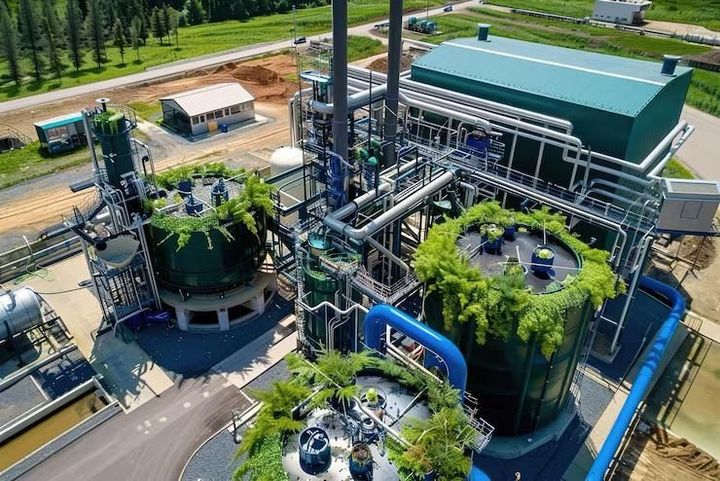
Carbon capture systems are designed to separate some of this CO₂ from other gases. The captured carbon dioxide can then be compressed, transported, used in suitable applications, or stored in appropriate geological formations.
A typical industrial carbon capture system includes several stages:
-
Gas preparation: Removes dust, moisture, or other substances that could interfere with the capture process.
-
CO₂ separation: Separates carbon dioxide from the remaining gas mixture.
-
Purification and compression: Prepares the captured gas for its intended destination.
-
Transportation: Moves the CO₂ through suitable pipelines, ships, or other approved methods.
-
Utilization or storage: Directs the captured carbon dioxide to an appropriate use or long-term storage location.
-
Monitoring: Checks equipment performance, emissions, and, where applicable, storage integrity.
Not every installation includes every stage. The configuration depends on the industrial process, the concentration of CO₂ in the gas stream, available infrastructure, and the intended destination of the captured carbon.
Why Industrial Carbon Capture Matters
Reducing greenhouse gas emissions requires changes in energy production, transportation, buildings, and industrial manufacturing. Electrification, energy efficiency, renewable energy, and alternative production methods can reduce many emissions. However, some industrial processes remain challenging to decarbonize.
Carbon capture can help address emissions from these activities when suitable alternatives are limited or require substantial infrastructure changes.
Its potential importance includes:
-
Cement manufacturing: Capturing CO₂ released during limestone processing as well as emissions from fuel combustion.
-
Steel production: Addressing emissions from selected production routes that rely on carbon-based reducing agents.
-
Chemical manufacturing: Separating concentrated CO₂ streams generated during particular chemical reactions.
-
Power generation: Capturing a portion of CO₂ from flue gases at suitable facilities.
-
Hydrogen production: Managing CO₂ produced during certain fossil-fuel-based hydrogen processes.
-
Industrial planning: Helping facilities evaluate different pathways for reducing their overall greenhouse gas emissions.
Carbon capture is not a universal solution. It requires energy, equipment, infrastructure, and ongoing monitoring. Its climate benefits depend on the amount of carbon captured, the energy source used, transport and storage performance, and the emissions produced throughout the process.
A responsible assessment therefore considers the entire system rather than the capture equipment alone.
Main Industrial Carbon Capture Technologies
Different carbon capture technologies work in different ways. The best option depends on the gas composition, operating temperature, pressure, industrial process, and required capture rate.
Post-combustion carbon capture
Post-combustion systems separate CO₂ from exhaust gases after fuel has been burned. Chemical solvents, often amine-based liquids, absorb carbon dioxide from the gas stream. The solvent is then heated to release concentrated CO₂ so it can be collected and processed.
This approach can be considered for existing power plants and industrial facilities because it can sometimes be added to an operating process. However, the equipment requires space and energy, particularly for solvent regeneration.
Pre-combustion carbon capture
Pre-combustion capture is used in selected processes where fuel is converted into a gas mixture before combustion. Through gasification or reforming, the process can produce hydrogen and carbon monoxide. A further reaction converts much of the carbon monoxide into CO₂ and hydrogen.
The carbon dioxide can then be separated before the hydrogen is used. This approach is relevant to certain industrial hydrogen and chemical production systems, although its overall climate benefit depends on the complete production pathway.
Oxy-fuel combustion
Oxy-fuel combustion uses oxygen rather than ordinary air for combustion. This produces an exhaust stream containing a high concentration of CO₂ and water vapor, making separation easier after the water is removed.
The system also requires oxygen production and specialized combustion equipment. These requirements can increase energy use and operational complexity.
Direct air capture
Direct air capture removes CO₂ from ambient air rather than from an industrial exhaust stream. Because atmospheric CO₂ is much more dilute than the carbon dioxide in many industrial gases, the process can require substantial energy and specialized equipment.
Direct air capture is distinct from industrial point-source capture, but both can contribute to carbon management when their full environmental impacts are carefully assessed.
Comparison of Carbon Capture Processes
|
Technology |
Main principle |
Important consideration |
|---|---|---|
|
Post-combustion |
Separates CO₂ from exhaust gases |
Energy needed to regenerate solvents |
|
Pre-combustion |
Separates CO₂ before fuel combustion |
Requires suitable fuel conversion processes |
|
Oxy-fuel combustion |
Burns fuel using oxygen |
Oxygen production and equipment requirements |
|
Solid sorbent capture |
Uses solid materials that bind CO₂ |
Material durability and regeneration |
|
Membrane separation |
Uses selective membranes to separate gases |
Gas pressure, composition, and membrane performance |
|
Direct air capture |
Removes CO₂ from ambient air |
Low atmospheric CO₂ concentration and energy demand |
These methods should not be compared using capture rate alone. Energy consumption, equipment requirements, operating conditions, emissions, and the final destination of the carbon dioxide all affect their overall performance.
How Carbon Capture Systems Operate
An industrial carbon capture installation usually follows a series of coordinated steps.
Gas collection and preparation: Exhaust gas is directed into the capture equipment. Depending on its composition, it may require cooling, filtration, or treatment to remove contaminants.
Carbon dioxide separation: The gas passes through a capture unit. This may use a liquid solvent, solid sorbent, membrane, or another separation method.
Carbon dioxide recovery: The capture material releases the CO₂ through heating, pressure changes, or another controlled process. The capture material may then be reused.
Compression and conditioning: The separated carbon dioxide is prepared for transport or storage. Moisture and impurities may need to be controlled to meet technical specifications.
Transport and final destination: CO₂ is sent to a suitable utilization facility or an approved storage site. Geological storage typically involves injecting carbon dioxide into carefully assessed underground formations.
Measurement and monitoring: Operators measure captured quantities, energy consumption, emissions, and equipment performance. Storage projects also require appropriate monitoring to assess containment and environmental risks.
Each stage affects the performance of the overall system. A high capture rate at the separation unit does not necessarily mean the same percentage of total facility emissions has been eliminated.
Recent Developments and Trends in Carbon Capture
Developments through 2025 and 2026 reflect growing interest in industrial decarbonization, lower-energy capture processes, carbon transport infrastructure, and permanent geological storage.
Improved capture materials: Researchers are investigating solvents, solid sorbents, and membranes that can improve CO₂ separation or reduce regeneration energy. Practical performance depends on durability, operating conditions, and the composition of industrial gas streams.
Integration with existing facilities: Industrial operators are assessing ways to connect carbon capture equipment to established plants. Retrofitting may reduce the need to replace an entire production facility, although space, energy requirements, and process compatibility can be significant challenges.
Carbon transport and storage networks: Shared pipelines and storage infrastructure are being developed or planned in several regions. Such networks can connect industrial facilities that produce CO₂ with suitable geological storage locations.
Digital monitoring: Sensors, automated controls, and data analysis systems can help operators identify performance changes, monitor energy use, and detect unusual operating conditions. These tools support management but do not replace physical inspections or independent verification.
Growing attention to lifecycle emissions: Climate assessments increasingly need to consider the energy used for capture, transportation, and storage, along with upstream emissions. This broader assessment helps distinguish gross capture from actual reductions in total greenhouse gas emissions.
Project timelines and regulatory conditions vary by country. Announcements, construction plans, and proposed capacity should not be treated as proof that a project is operational or achieving its intended climate results.
Laws, Policies, and Safety Requirements
Industrial carbon capture is affected by climate policy, environmental protection rules, industrial safety requirements, and regulations governing carbon dioxide transport and geological storage. Requirements differ by country and by the type of project.
Climate and emissions policies
Governments may establish industrial emissions limits, carbon pricing mechanisms, climate targets, or financial incentives for verified emissions reductions. These policies can influence whether a facility evaluates carbon capture as part of its decarbonization strategy.
Geological storage regulations
Long-term CO₂ storage requires careful assessment of underground formations, well integrity, groundwater protection, and the risk of leakage. Depending on the jurisdiction, projects may need permits, monitoring plans, reporting procedures, and provisions for long-term responsibility.
Environmental assessment
Large industrial projects may be subject to environmental impact assessments and approvals covering land use, water consumption, air emissions, waste, and local ecological effects. Carbon capture equipment can introduce additional energy and water demands that need to be considered.
Industrial safety
Carbon dioxide is not flammable, but high concentrations can displace oxygen and create a serious asphyxiation hazard. Pressurized CO₂ systems also require suitable engineering controls, leak detection, ventilation, emergency planning, and worker training.
India-specific considerations
In India, relevant requirements may include environmental clearances, applicable air and water pollution regulations, factory safety rules, and permissions for associated infrastructure. National climate strategies and industrial decarbonization initiatives may also influence project planning. Requirements depend on the facility, location, and activity; carbon capture should not be assumed to have a single blanket approval process.
International technical standards and recognized measurement, reporting, and verification frameworks can help organizations document captured quantities and evaluate storage performance. However, following a technical standard does not automatically replace applicable legal approvals.
Tools and Resources for Carbon Capture Planning
Engineers, environmental specialists, researchers, and industrial planners can use several types of resources to evaluate carbon capture systems.
-
Emissions calculators: Estimate baseline CO₂ emissions from fuel consumption, production data, and process-specific emission factors.
-
Process simulation software: Models gas separation, solvent regeneration, heat requirements, and equipment performance.
-
Lifecycle assessment tools: Evaluate emissions across the energy supply, capture, transport, and storage stages.
-
Material selection databases: Provide information about solvents, sorbents, membranes, corrosion resistance, and operating limits.
-
Geological assessment tools: Support the evaluation of underground formations and potential storage capacity.
-
Monitoring and reporting templates: Organize measurements, equipment records, captured quantities, and emissions data.
-
Safety assessment checklists: Help identify risks involving pressurized gas, confined spaces, chemical exposure, and emergency response.
-
Technical learning resources: Introduce carbon capture principles, industrial process engineering, environmental assessment, and carbon accounting.
A useful starting point is to establish a reliable emissions baseline. The facility can then compare capture options using consistent assumptions about energy consumption, capture efficiency, operating conditions, and the final destination of the CO₂.
Frequently Asked Questions
What is the main purpose of industrial carbon capture?
Its main purpose is to separate carbon dioxide from industrial gas streams so that some emissions can be prevented from entering the atmosphere. The captured CO₂ may be used in appropriate applications or stored underground.
Which industries can use carbon capture technology?
Potential applications include cement, steel, chemicals, hydrogen production, and selected power generation facilities. Suitability depends on the gas stream, technical requirements, infrastructure, and overall emissions impact.
Does carbon capture eliminate all industrial emissions?
No. It generally captures only a portion of the targeted CO₂ emissions. Other emissions may arise from fuel use, electricity consumption, raw materials, transportation, and equipment operation.
What happens to captured carbon dioxide?
It may be used in industrial processes or transported to an approved geological storage site. The climate benefit of utilization depends on how the CO₂ is used and how long it remains out of the atmosphere.
Is carbon capture environmentally harmless?
No technology is entirely without environmental impacts. Carbon capture can require substantial energy, water, chemicals, and infrastructure. Its benefits and risks should be assessed across the complete process, including transport and final storage or use.
Conclusion
Industrial carbon capture systems are an important option for managing emissions from industrial activities that can be difficult to decarbonize. Technologies such as post-combustion capture, pre-combustion separation, oxy-fuel combustion, membranes, and solid sorbents work in different ways and suit different operating conditions.