Industrial Fiber Processing Technology: Equipment and Process Insights
Industrial fiber processing technology refers to the machines, methods, and control systems used to transform raw fibers into materials suitable for manufacturing. These fibers may come from natural sources, such as cotton, flax, and wool, or from manufactured materials, such as polyester, nylon, glass, and carbon fiber.
The main purpose of fiber processing is to prepare fibers for their intended use while maintaining consistent quality, suitable physical properties, and reliable production performance. Different fibers require different processing methods because their length, strength, flexibility, surface characteristics, and resistance to heat or chemicals can vary considerably.
For example, cotton fibers may need cleaning, opening, blending, and carding before spinning. Synthetic fibers may require extrusion, drawing, cutting, or surface treatment. Glass and carbon fibers often need specialized handling and conversion techniques for technical and composite applications.
Industrial fiber processing equipment helps manufacturers perform these operations with greater consistency than manual methods alone. Automation, electronic monitoring, and improved machine controls have also made it possible to manage production conditions more precisely.
How Fiber Processing Works
Fiber processing generally follows a sequence of preparation, transformation, inspection, and finishing steps. The exact process depends on the fiber type and the intended final product.
Common stages include:
Raw material preparation: Fibers are inspected, separated, cleaned, or conditioned before processing.
Opening and blending: Fiber bundles are loosened and mixed to improve uniformity.
Carding and combing: Fibers are aligned, separated, and prepared for subsequent operations where required.
Spinning or web formation: Fibers are converted into yarn or organized into a web for nonwoven materials.
Finishing and treatment: Materials may undergo heat treatment, coating, drying, or other processes to achieve required properties.
Quality inspection: Samples and production data are checked for consistency, strength, dimensions, and visible defects.
Not every production line uses all these stages. For example, nonwoven manufacturing can create a fabric directly from a fiber web without conventional yarn spinning and weaving.
Industrial Fiber Processing Equipment and Its Applications
Industrial fiber processing relies on specialized equipment designed for different materials and production requirements. Selecting suitable machinery depends on fiber characteristics, production volume, final product specifications, and workplace conditions.
The following table summarizes common equipment and its main functions.
Equipment | Main function | Typical application |
|---|---|---|
Fiber opening machines | Separate compact fiber bundles | Cotton and synthetic fiber preparation |
Carding machines | Align and separate fibers | Yarn and nonwoven production |
Combing machines | Remove short fibers and improve alignment | Fine and uniform yarn |
Spinning machines | Convert prepared fibers into yarn | Textile and technical fabric production |
Extrusion systems | Form continuous synthetic filaments | Polyester, nylon, and other manufactured fibers |
Drawing machines | Stretch fibers to modify their properties | Synthetic and high-performance fibers |
Nonwoven production lines | Arrange and bond fibers into sheets | Filtration, hygiene, and medical materials |
Drying and finishing equipment | Control moisture and apply treatments | Industrial textiles and specialty fabrics |
Fiber testing instruments | Measure material properties | Quality assurance and research |
Each machine performs a specific task, but the equipment must also work together as a coordinated production system. Poor synchronization between stages can create bottlenecks, increase waste, or affect the quality of the finished material.
Types of Industrial Fiber Processing
Different fiber categories require different processing methods. Understanding these differences helps explain why a single machine configuration cannot meet every manufacturing requirement.
Natural fiber processing
Natural fibers originate from plants or animals. Cotton, wool, flax, and hemp are common examples.
Processing often includes cleaning, opening, carding, combing, and spinning. Some natural fibers also require washing or other preparation to remove impurities. Because natural materials can vary in length, moisture content, and strength, careful blending and inspection are important.
Synthetic fiber processing
Synthetic fibers are produced through chemical and mechanical processes. Common examples include polyester, nylon, and polypropylene.
Many synthetic fibers begin as polymer materials that are melted or dissolved and formed into filaments through extrusion or spinning processes. The filaments may then be stretched, textured, cut into staple fibers, or treated to achieve particular properties.
Temperature control, polymer quality, and machine settings influence the resulting fiber characteristics.
Technical and high-performance fiber processing
Technical fibers are designed for specific functions rather than appearance alone. They are used in filtration, automotive components, construction materials, protective equipment, aerospace structures, and industrial reinforcement.
Glass fibers and carbon fibers are important examples. Their processing may involve specialized tension controls, surface treatments, controlled winding, and strict contamination management.
These materials can require more precise handling than conventional textile fibers because small defects may affect the performance of the final component.
Nonwoven fiber processing
Nonwoven materials are made by arranging fibers into a web and bonding them mechanically, thermally, or chemically. The process does not require conventional spinning and weaving.
Nonwoven technology is widely used in filtration media, insulation, medical textiles, automotive interiors, and protective materials. Equipment selection depends on the required thickness, strength, porosity, and bonding characteristics.
Why Industrial Fiber Processing Matters Today
Fiber processing technology supports many industries beyond clothing and household textiles. It contributes to manufacturing systems that require consistent material properties, dependable production, and specialized performance.
Its importance can be understood through several key areas.
Manufacturing consistency: Automated controls help maintain similar processing conditions across production batches.
Material efficiency: Accurate feeding, cutting, blending, and monitoring can reduce avoidable fiber loss.
Product performance: Controlled processing helps produce fibers with suitable strength, flexibility, diameter, and surface characteristics.
Production planning: Sensors and monitoring systems help identify delays, equipment faults, and process variation.
Environmental management: Better control of water, energy, chemicals, and waste supports more responsible production.
Product development: Advanced machinery allows researchers to investigate new fiber blends and functional materials.
However, automation alone does not guarantee better results. Poorly maintained equipment, unsuitable raw materials, and incorrect settings can still cause defects. Successful processing requires trained operators, preventive maintenance, and clear quality standards.
Recent Developments in Fiber Processing Technology
Recent developments through 2025 and 2026 have placed greater emphasis on digital manufacturing, textile recycling, resource efficiency, and advanced materials.
Digital monitoring and intelligent automation
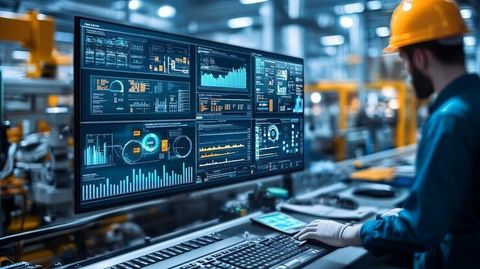
Industrial manufacturers increasingly use sensors to track machine speed, temperature, vibration, tension, and production output. Some systems apply data analysis to identify abnormal operating conditions before they cause extended downtime.
Automated inspection can also help detect irregularities in fiber webs, yarn, and finished fabrics. The usefulness of these systems depends on sensor accuracy, data quality, and integration with existing equipment.
Textile recycling and circular manufacturing
On March 10, 2026, India's Ministry of Textiles described policy measures relating to environmental performance, emission reporting, and textile sustainability. Research and development activities have also focused on converting textile waste into usable materials.
Mechanical recycling breaks textile waste into smaller fibers for reuse, while chemical recycling uses controlled chemical processes to recover materials or their building blocks. Each approach has limitations. Mechanical recycling can shorten fibers, while chemical methods may require careful sorting, specialized processing, and substantial energy input.
Lower-impact processing methods
Manufacturers and researchers are examining methods that reduce water and energy use, including improved drying controls, heat recovery, low-liquor treatment, and alternative finishing technologies. The suitability of each method depends on the fiber type and the required product properties.
These developments indicate a wider shift toward more connected, resource-aware, and application-specific manufacturing. Adoption nevertheless varies according to technical complexity, available skills, infrastructure, and regulatory requirements.
Laws, Regulations, and Industrial Safety
Industrial fiber processing may be affected by machinery safety standards, workplace health requirements, environmental regulations, chemical controls, and waste management rules. The exact requirements depend on the country, production activity, and materials being processed.
Environmental regulations in India
India's Environment (Protection) Act, 1986, and associated rules establish an important framework for controlling industrial pollution. Textile processing facilities may need to comply with applicable wastewater discharge, air emission, and hazardous chemical requirements.
Units carrying out wet processing, such as dyeing and finishing, may require effluent treatment systems to ensure that wastewater meets the prescribed standards. Applicable permissions and monitoring obligations should be confirmed with the relevant State Pollution Control Board.
Fiber processing machines contain moving parts, rotating shafts, cutting mechanisms, heated surfaces, and electrical systems. Appropriate safeguards are necessary to reduce the risk of injury.
Important safety practices include:
Installing suitable guards around hazardous moving components.
Providing emergency stop controls where required.
Isolating electrical and mechanical energy before maintenance.
Training workers to operate and clean equipment safely.
Controlling dust, airborne fibers, heat, and noise.
Maintaining inspection records and documented operating procedures.
Manufacturers and facility operators should identify applicable national machinery standards and workplace safety rules rather than assuming that one standard covers every machine.
Tools and Resources for Better Processing
Several categories of tools help engineers, operators, and production managers improve fiber processing.
Process monitoring systems: Sensors and control dashboards track operating conditions, production rates, and equipment alarms.
Quality testing instruments: Tensile testing machines, fiber length analyzers, moisture meters, microscopes, and thickness gauges help assess material properties.
Maintenance planning tools: Digital maintenance schedules and equipment logs help track inspections, replacement intervals, and recurring faults.
Energy and water tracking: Metering systems and calculation spreadsheets help compare resource consumption across production batches.
Material flow diagrams: Process maps show how raw fibers move between machines, helping teams identify bottlenecks and unnecessary handling.
Environmental assessment tools: Waste inventories and lifecycle assessment methods help evaluate material use, energy demand, emissions, and recycling options.
These resources are most effective when their measurements are recorded consistently and interpreted alongside production requirements. Digital systems should also be protected through appropriate access controls, backups, and cybersecurity practices.
Frequently Asked Questions
What is industrial fiber processing technology?
It is the combination of equipment and production methods used to prepare, transform, test, and finish natural, synthetic, and technical fibers for different industrial applications.
Which machines are commonly used in fiber processing?
Common equipment includes opening machines, carding machines, combing machines, spinning systems, extrusion equipment, drawing machines, nonwoven production lines, and fiber testing instruments. The required combination depends on the material and final product.
How does automation improve fiber manufacturing?
Automation can improve process consistency, monitor machine conditions, identify irregularities, and reduce some forms of manual handling. Its effectiveness depends on equipment suitability, maintenance, operator training, and the accuracy of process data.
How can fiber processing reduce environmental impact?
Manufacturers can evaluate material recovery, recycling, efficient drying, water management, heat recovery, and improved waste segregation. The best approach depends on the fiber composition and the environmental characteristics of the production process.
What factors should be considered when selecting fiber processing equipment?
Important factors include fiber type, required output, product specifications, machine compatibility, energy consumption, safety features, maintenance needs, quality requirements, and applicable regulations.
Conclusion
Industrial fiber processing technology is an important part of modern manufacturing, supporting conventional textiles, technical fabrics, filtration materials, composite components, and other specialized products. Its effectiveness depends on selecting appropriate equipment, controlling process conditions, and maintaining consistent quality.