Exploring AR in the Automotive Industry: Guide to Smart Technology
Augmented reality (AR) combines digital information with the physical environment. In the automotive industry, it can place useful information within a driver's view or provide interactive digital guidance during vehicle design, manufacturing, inspection, and maintenance.
Unlike a traditional screen, AR attempts to connect digital information with the real world. For example, an AR head-up display can show navigation directions, road information, or warnings in an area visible to the driver without requiring the driver to look down at a separate screen.
The technology has developed alongside connected vehicles, advanced driver assistance systems (ADAS), artificial intelligence, sensors, cameras, and digital mapping. These technologies provide the information that AR systems can present in a more contextual format.
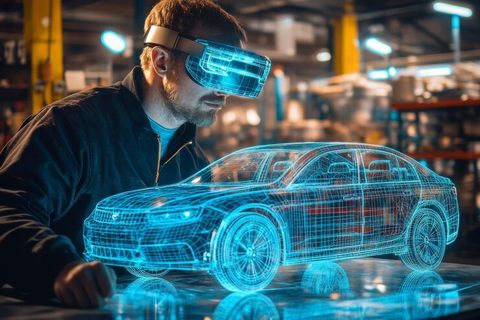
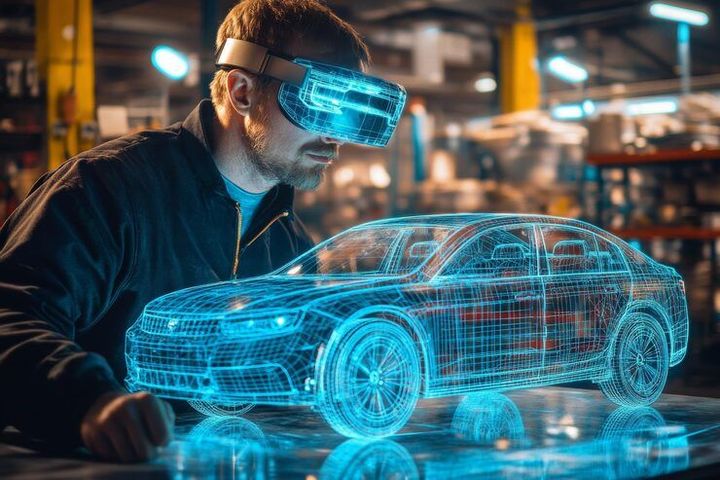
AR is also being explored beyond the driver's seat. Automotive manufacturers can use augmented reality for vehicle design visualization, factory assembly guidance, technical training, inspection, and maintenance procedures.
This makes automotive augmented reality technology a broader field than simply displaying navigation information.
Importance of AR for Automotive Technology
AR matters because modern vehicles generate large amounts of information. Speed, navigation, traffic conditions, driver assistance warnings, vehicle status, and road information can all compete for the driver's attention.
A carefully designed AR interface can help organize some of this information around the driver's forward view. However, AR does not automatically make driving safer. Poorly designed graphics, excessive information, or distracting animations can increase visual workload.
This is why AR HUD technology, driver attention, human-machine interaction, and display design are important areas of automotive research.
Important applications include:
- AR head-up displays: Information can appear within the driver's forward field of view.
- Navigation assistance: Digital arrows and directional information can be aligned with roads or turns.
- ADAS information: Visual indicators can help communicate information from driver assistance systems.
- Parking assistance: AR graphics can help users understand vehicle surroundings.
- Vehicle maintenance: Technicians can receive step-by-step visual information.
- Manufacturing: Digital instructions can be presented alongside physical components.
- Vehicle design: Designers can examine virtual components before physical production.
- Driver training: Simulated environments can support learning and technical demonstrations.
The technology is particularly relevant as vehicles become increasingly software-defined and connected.
| AR Application | Main Purpose | Example Information |
|---|---|---|
| AR HUD | Driver information | Speed, navigation, warnings |
| AR Navigation | Route guidance | Turns and road directions |
| Parking AR | Vehicle positioning | Parking boundaries |
| Manufacturing AR | Assembly guidance | Component instructions |
| Maintenance AR | Technical assistance | Repair procedures |
| Design AR | Visualization | Virtual vehicle components |
Recent AR Automotive Trends
AR HUD and Smart Windshield Displays
One of the major developments in automotive AR is the evolution of head-up displays. Earlier HUD systems generally projected limited information, such as speed or navigation instructions.
Newer concepts aim to create larger visual areas where information can appear more closely connected with the road environment.
The challenge is accurate positioning. A digital marker should correspond appropriately with the physical road, vehicle, pedestrian, or other object. Cameras, sensors, positioning systems, mapping data, and vehicle software can all contribute to this process.
Artificial Intelligence and AR
AI is increasingly connected with automotive human-machine interfaces. AI-based systems can process large amounts of information and help determine what information may be relevant in a particular driving situation.
For AR, this could mean more context-sensitive information instead of continuously displaying multiple graphics.
For example, an AR system could prioritize navigation information when approaching a turn and reduce unnecessary visual elements when there is little relevant information to display.
The objective is not simply to display more information. The larger challenge is presenting the right information at the appropriate time.
Developments During 2025–2026
Regulatory work around automated driving and driver assistance continued to develop during 2026. In January 2026, the UNECE Working Party on Automated/Autonomous and Connected Vehicles advanced work on automated driving regulations and amendments concerning Driver Control Assistance Systems.
In June 2026, UNECE reported approval of a global regulatory framework for fully autonomous driving systems. The framework focuses on safety management, validation, testing, and monitoring rather than treating automation as a purely technological issue.
These developments are relevant to AR because AR interfaces may become increasingly connected with ADAS and automated-driving functions. As vehicle systems become more capable, the way information is communicated to the driver becomes increasingly important.
Laws, Regulations, and Safety Policies
European Union Vehicle Safety Rules
The European Union has introduced increasingly detailed requirements for vehicle safety systems. Regulation (EU) 2019/2144 includes systems such as intelligent speed assistance, driver drowsiness and attention warning, advanced driver distraction warning, emergency stop signals, and event data recorders.
The EU's General Safety Regulation has been implemented in stages. From 7 July 2026, additional safety requirements became applicable to new passenger cars and vans, including advanced driver distraction warning systems.
These requirements do not mean that every AR feature is automatically approved or required. Instead, AR interfaces used in vehicles must be considered within broader vehicle safety, driver attention, visibility, and type-approval frameworks.
UNECE Vehicle Regulations
UNECE regulatory work has also considered augmented reality and field-of-vision technologies. Documents associated with vehicle regulations distinguish AR-related information and head-up display areas and examine how visual information interacts with the driver's field of vision.
This is important because an AR display should not unnecessarily obstruct the driver's view or create excessive visual workload.
United States Considerations
In the United States, vehicle displays are also affected by federal vehicle safety requirements and human-factors considerations. NHTSA guidance on driver distraction emphasizes keeping systems from obstructing the driver's field of view and designing visual information so that tasks can be completed through brief sequential glances.
Regulatory requirements vary between countries. Automotive AR developers therefore need to consider the specific approval framework applicable to the vehicle market.
Tools and Resources for Automotive AR
AR Development Tools
General AR development environments can be used to create prototypes for vehicle interfaces, visualization, training, and maintenance applications.
Useful categories include:
- AR development frameworks
- 3D modeling software
- Digital twin platforms
- Vehicle simulation environments
- Computer-aided design tools
- 3D visualization systems
- Sensor and camera testing platforms
- Human-machine interface prototyping tools
Testing and Measurement Resources
Automotive AR development also requires testing beyond visual appearance. Useful resources include:
- Driver workload assessment methods
- Field-of-view evaluation tools
- Display readability checklists
- Human-machine interaction guidelines
- Vehicle simulation systems
- Road-scene testing environments
- AR alignment and calibration tools
- Safety validation templates
These resources can help developers evaluate whether information is understandable, correctly positioned, and appropriate for the driving environment.
Frequently Asked Questions
What is AR in the automotive industry?
Automotive AR uses augmented reality to combine digital information with a driver's or technician's view of the physical environment. Applications include head-up displays, navigation, maintenance, manufacturing, and vehicle design.
How does an AR head-up display work?
An AR head-up display projects digital information into the driver's forward field of view. Depending on the system, vehicle sensors, cameras, mapping information, and positioning technologies can help determine where information should appear.
Is automotive AR only used for navigation?
No. AR can be used for navigation, driver assistance information, parking guidance, manufacturing, maintenance, design visualization, training, and other automotive applications.
Can AR improve driving safety?
AR can potentially help organize relevant information within the driver's forward view, but its safety effect depends on system design, accuracy, timing, visibility, and driver workload. Poorly designed displays may create additional distraction.
What is the future of AR in automotive technology?
Future development is likely to involve closer integration between AR displays, AI, sensors, ADAS, digital maps, connected vehicles, and automated driving systems. Regulatory and human-factors requirements will remain important as these technologies develop.
Conclusion
Augmented reality is becoming an important area of automotive smart technology, connecting digital information with the physical driving environment. AR head-up displays, navigation overlays, manufacturing guidance, maintenance assistance, and vehicle design visualization represent several important applications.